
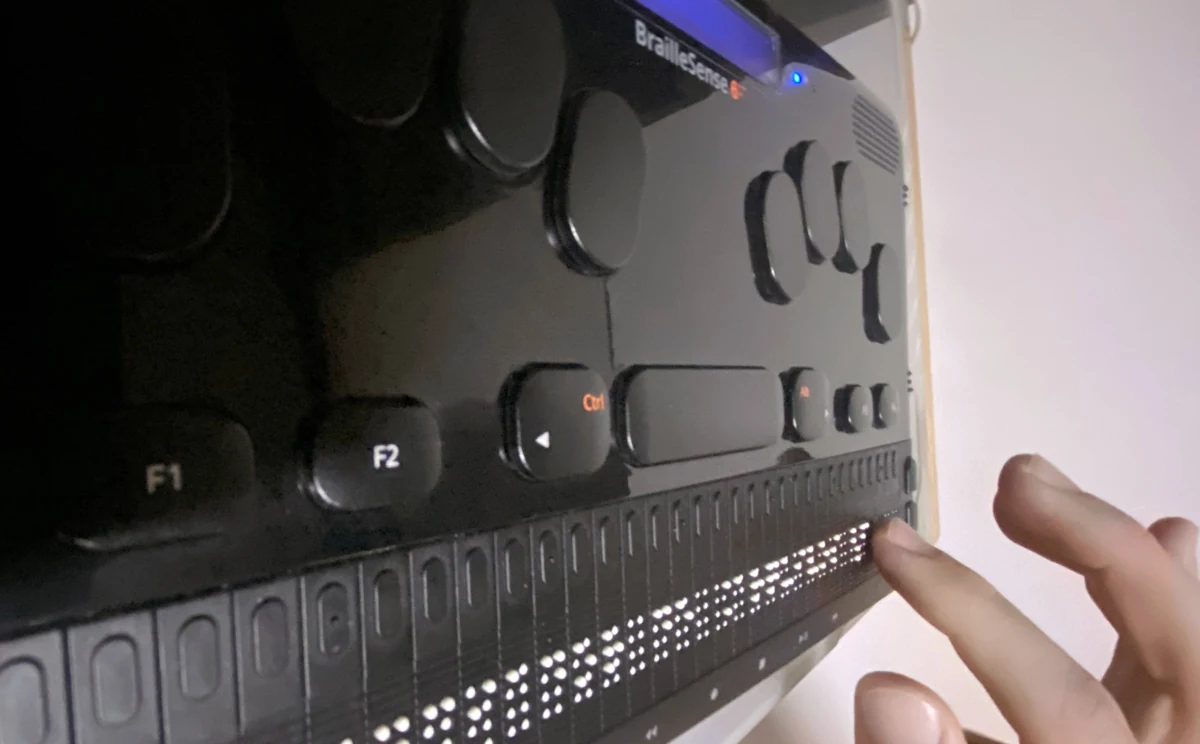

When a braille display comes back from repair
Article topic: Technology and Autonomy
Once, I had to write to a manufacturer again about a braille display that had just come back from repair. Soon after the user started using it again, the dots in some cells began to appear incorrectly. The user let us know, and we suggested running a calibration. Before long, the problem was back.
I described the situation in writing to technical support. In the same message, I explained that after a second calibration the dots seemed to be working, but that an attempt to reinstall the firmware ended in a communication error. I couldn’t consider the matter closed yet. Just because text displays correctly at a given moment doesn’t mean the fault is gone.
On a braille display, a dot that doesn’t rise or fall as it should can change what I’m reading. If the fault is intermittent, it’s also hard to tell whether a letter is misspelled in the document or whether the problem is in the cell showing it. Before I accept a repair as good, I need to see how the device works in use and know what was done to it.
The distance between the user and the repair center
In other exchanges, I had to ask for repair reports. I wanted to know which parts had been replaced and what had caused the fault, because that was what we needed to explain to users what had happened to their devices. A device that comes back without that explanation leaves questions open, especially if it fails again.
In Latin America, I ran into additional difficulties. At the time, many of the specialized services I had access to were outside the region. We looked for solutions with local engineers, but some of these problems couldn’t be solved. Repairing the cells of a braille display can require very specific parts and tools, plus someone who knows how to use them.
The time the whole process takes should also count when evaluating a device. If someone depends on their braille display to read, study, or work, a breakdown can disrupt their routine far longer than the repair itself. On top of the repair come shipping, diagnosis, the wait for spare parts, and the trip back.
When I think about the price of an assistive device, I also want to know what happens if it stops working. Is there a service the person can turn to? Can the components be repaired, or will the whole device have to be replaced? I’d rather ask myself those questions while we’re still choosing what to buy. Later on, the braille display may already be packed in a box, ready to travel to a distant repair center, while the person who uses it waits without it.