Following a pipit’s song in flight
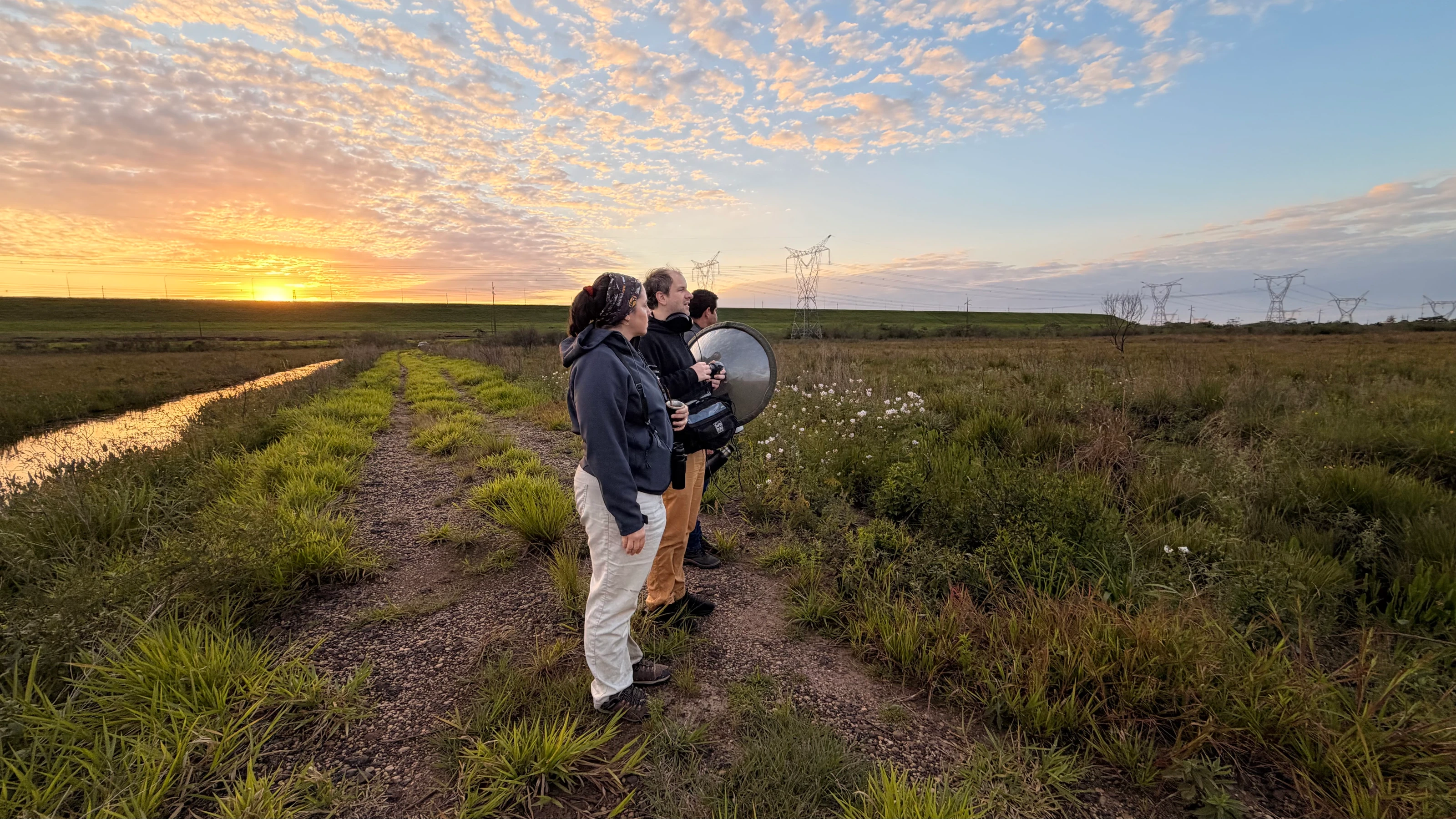
I pointed out where the song was coming from. Tatiana spotted the pipit in the air and helped me keep my microphone trained on it as it flew.
How I record birdsong and soundscapes, from preparing for a field trip to listening back to the recordings.
I pointed out where the song was coming from. Tatiana spotted the pipit in the air and helped me keep my microphone trained on it as it flew.
We left the emergency lights on. Hundreds of us listened to the same recording. Afterwards people spoke about their grandparents and the farms they remembered.
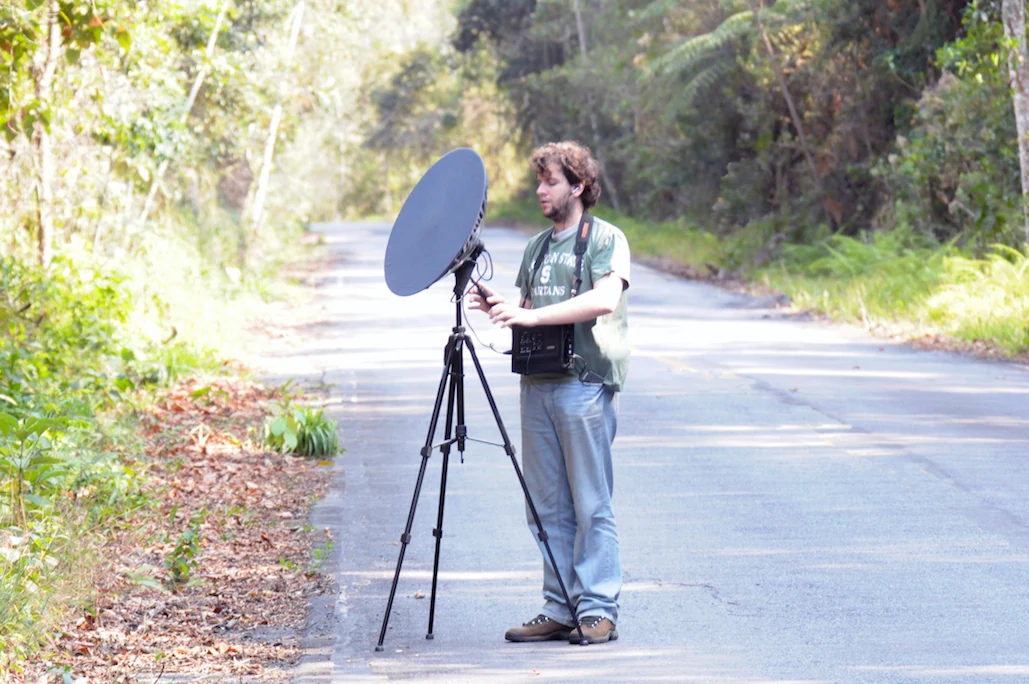
Once I know where a bird is singing, I still have to find the best angle for the recording. Sometimes it comes from a nearby branch.
My father told me geese had flown by while I was out with Ronja. I still had to hear what the microphones had picked up.
I enjoyed a pianist’s recording of himself playing at dawn in a Costa Rican forest. In my own recordings I prefer to hear how the birds answer one another.
A road can be a long way from the forest and sound very close on a recording. My fieldwork starts at home, with questions about what people can hear at the site.
At a birding event in Argentina, a Colombian played me his favourite birdsong from home. I knew I’d recognise it again. Getting a recording of my own took six years.
I came back from Chovoreca full of enthusiasm for the place. After fire swept through that part of Paraguay, the two tracks I had recorded there took on a different meaning.
Birdsong on the pampas sounds dry. In a forest an echo can linger after the bird falls quiet. The place itself leaves a trace on the recording.
In Antarctica I recorded the wind in the Uruguayan flag, the crack of the ice and the voice of an elephant seal.
I used to take one microphone into the field to record birds. For Retratos del Brasil, I wanted to hear a whole place in stereo.
My father wrote this account of our first field trip together. Over four days we recorded more than a hundred species.