
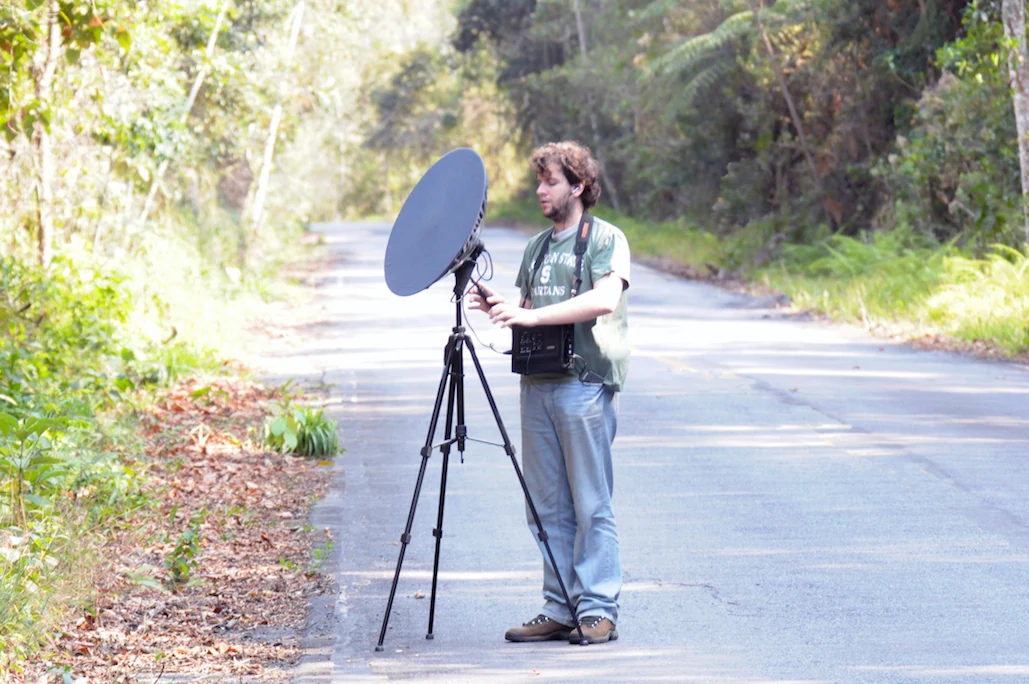

Following a pipit’s song in flight
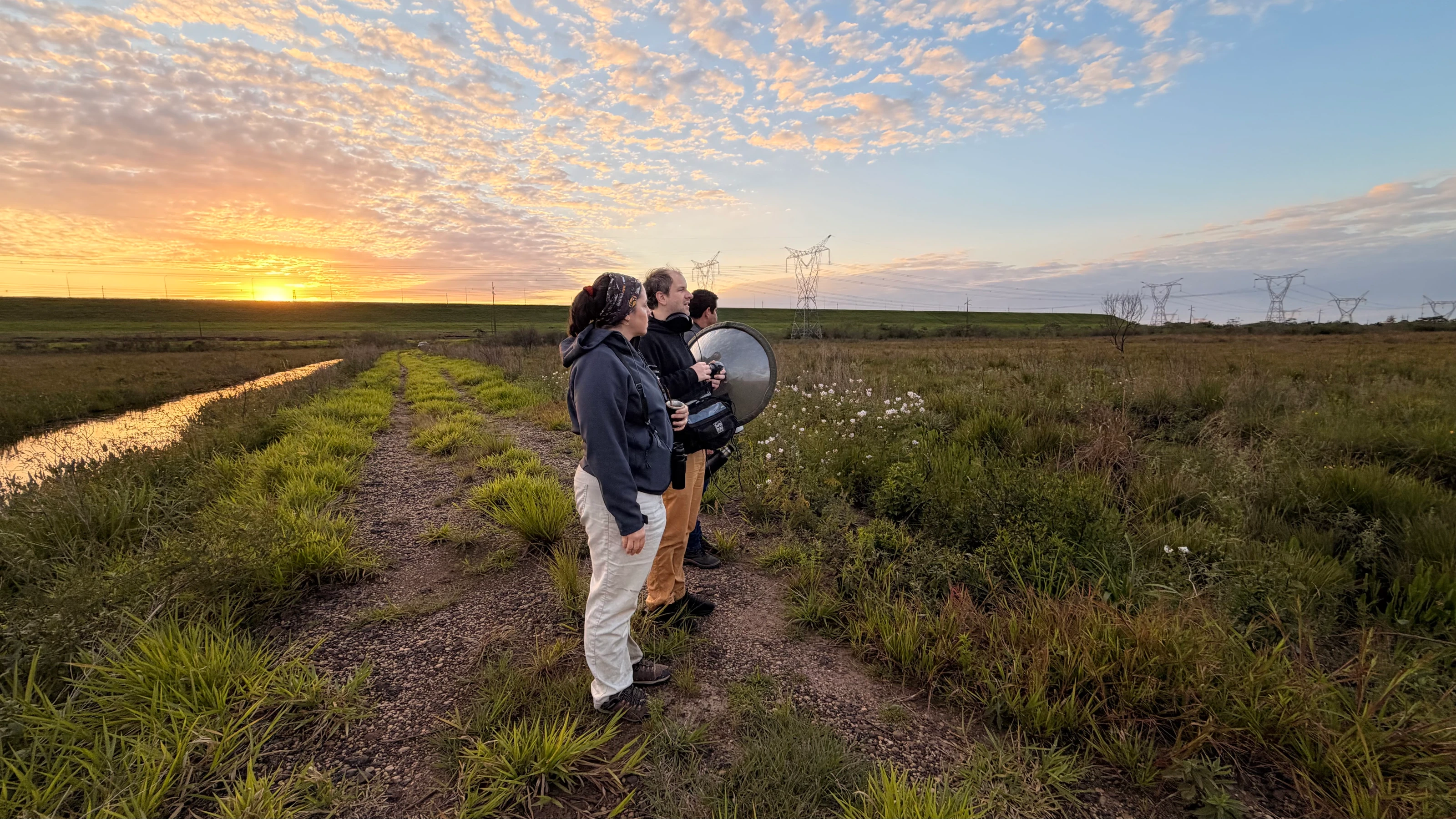
I could hear the Ochre-breasted Pipit, but Tatiana Galluppi hadn’t spotted it yet. I aimed my parabolic dish towards the song and pointed with my hand. Then she saw it. From that moment on, she was the one helping me follow the bird. The pipit (Anthus nattereri) sings in flight. To keep its song in focus, I had to keep moving the dish as it flew.
When we presented Sonidos de los Pastizales on November 16, this was the first bird I played for the audience. It’s the bird on the album cover. The track brings together three recordings. I made the first one on my own near General Artigas, on a better-preserved stretch of grassland. I was lucky. Tatiana and I made the second on a cattle ranch. Listen closely and you can hear the electric fence alongside the song. The bird was singing loud enough to come through clearly over the sound of the wire.
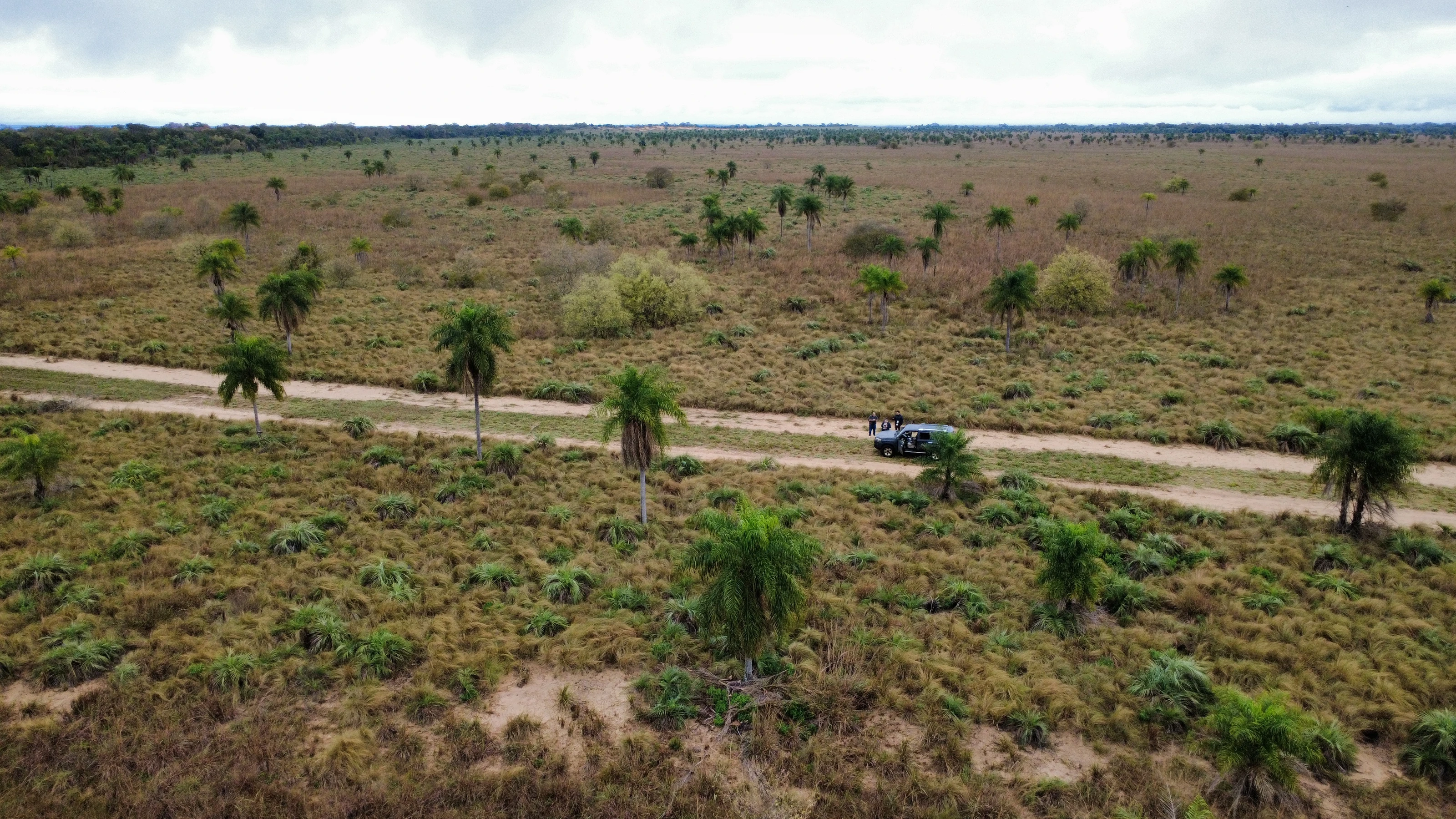
With the Ibera Seedeater (Sporophila iberaensis), I had to wait for the pauses in its song. Of the nine or ten mornings we spent in the field, only once did I hear it sing like that. There was a strong wind. Just as it began singing, someone started a truck. That first take didn’t make it onto the album.
Luckily, it sang again. Whenever it fell silent, I could move a little closer. Track 17 brings together several recordings of that one bird. Listen to how much its song varies from one take to the next. On Sonidos de los Pastizales, listen to the pipit on track 3 and the seedeater on track 17.