The geese I recorded while walking with Ronja
My father was the first to tell me there was something worth listening to. I’d left my microphones in place and gone for a walk with Ronja, my guide dog, to clear my head. When I came back, Dad told me some geese had flown by. He thought I might have something extraordinary on the recorder.
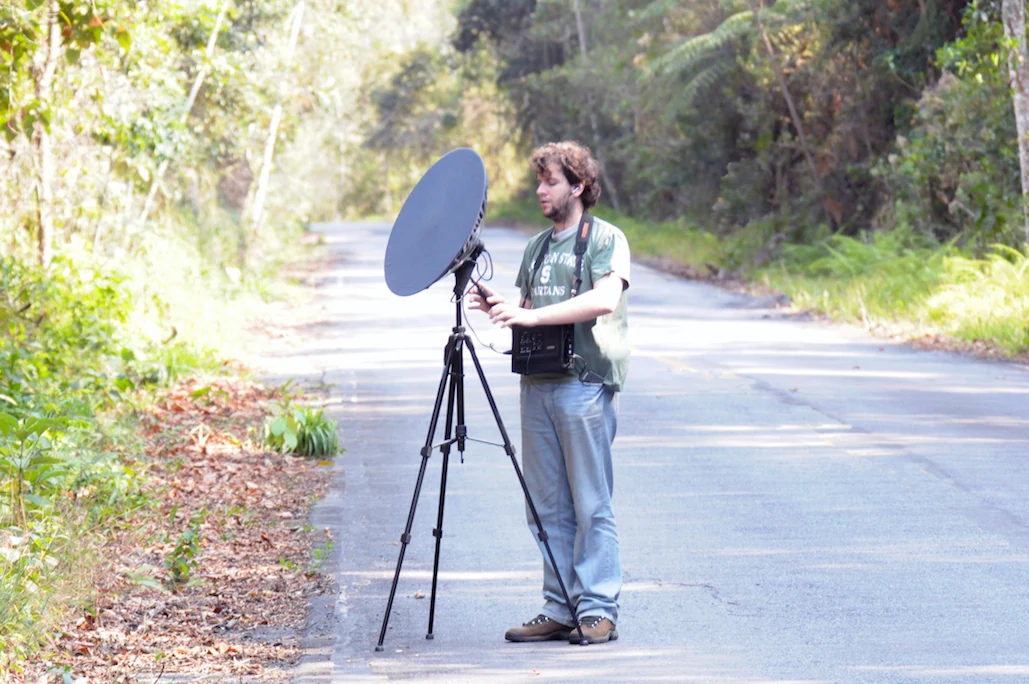
Dad knew the work well. On No Toquen Nada, I described some of our outings together. He would often get up at two or three in the morning to come with me. Some stretches of road were so stony we had to take them slowly. We wanted half an hour to spare so I could position the microphones before first light. The decision I’d made in the field the day the geese flew by was a simple one. When I went for my walk, I left the equipment running where it was.
Dad’s account gave me an idea of what to listen for. The sheer scale of what I’d captured only struck me when I edited the recording. The calls grew louder, and there was an echo in them that gave me a sense of how big the place was. I found it very moving. Dad could tell me that geese had flown past. To hear that echo, I needed the recording.
I played it later at a talk in Cali. Carlos Ramírez was in the audience, and he brought it up when he interviewed me for Nuestro Oxígeno. He remembered the bird at the beginning, the sound of the geese building and the way people reacted. It meant a lot to hear that some of what I’d felt while editing had reached the people in that room.