
The branch that reflects a bird’s song
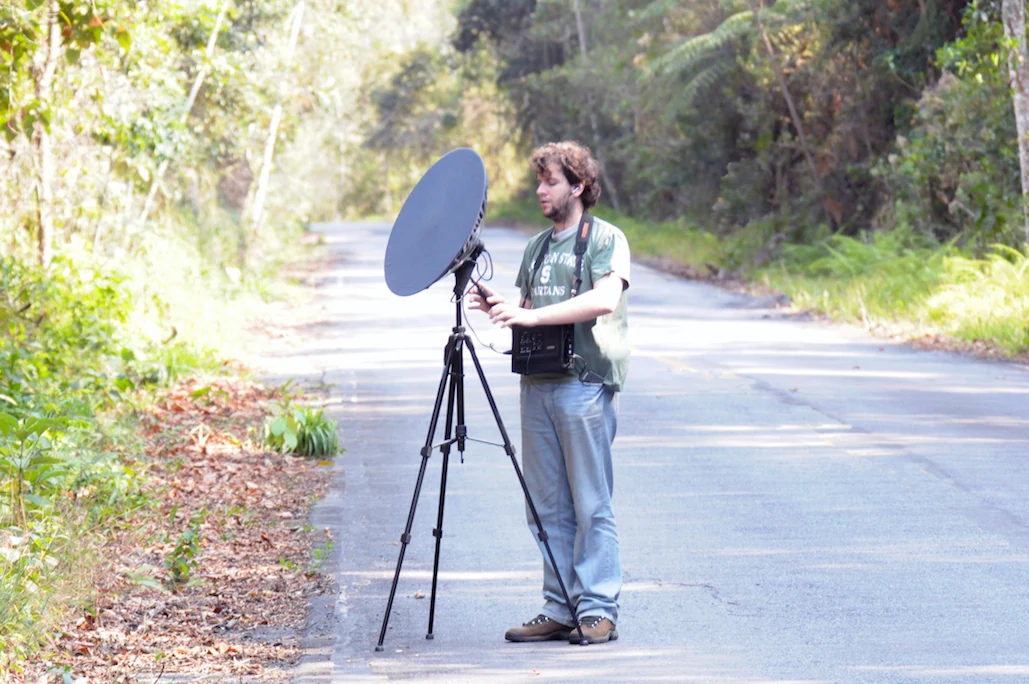
When I hear a bird in the trees, I leave my headphones off. I want to work out where the song is coming from with my own ears. Once I have a direction, I ask my guide whether there’s a way through the trees. Sometimes three steps to the right are enough. The bird is still in the same place, but I can listen from a different angle.
That’s when I put on my headphones. A parabolic reflector is a curved dish that concentrates sound arriving from the direction it faces onto a microphone. On No Toquen Nada, I compared it to a magnifying glass. As I turn the dish, I listen for a change. When I find the right angle, the song gets noticeably louder in my headphones.
In a forest, something curious can happen. I know where the bird is, yet its song comes through more clearly when I turn the dish towards a nearby branch. Some of the sound is reaching me by reflection off that branch. I can use that path to record the bird from where I stand. That’s why I take time to try different directions even after I’ve located it.
The producers at BirdNote found a way to let you hear the difference. As I explain how I focus the dish, they bring in one of my recordings from the Macaulay Library, a Masked Gnatcatcher (Polioptila dumicola). Listen to how faint its song is at first and how clearly it emerges a little later. That change is what I’m listening for as I turn the reflector.